This post by Ben form Fizzics Education has a video and radio interview discussing the video conferencing.
This video covers the variety of educational virtual excursion festivals available for schools arranged by Virtual Excursions Australia. VEA is a network of museums, galleries, libraries, environmental centres, aquariums & more.
As you can see, there are so many opportunities available for schools, libraries, hospitals, remand centers and more to engage learners with real time learning with subject matter experts via video conference. It’s so easy these days! By the way, the interviewer was Jan Zanetis who is the Managing Director the Centre for Interactive Learning & Collaboration and a current International Society for Technology in Education board member.
You might like to find out more about events & learning festivals being conducted Virtual Excursions Australia and the work being done to reach remote learners via web and video conference! Also you might also like to know more about the Churchill Fellowship on best practice in science education via video conference I completed last year and it’s associated findings for Australian educators.
Ben from Fizzics Education connected with Unalaska library to run a video conference on the science of sound. As usual I had a blast working with the kids, but I got a great surprise to find that it got recorded by local community radio station kucb 89.7fm!
Video conferencing offers the opportunity to enrich regional and remote communities throughout the world. If your school or cultural organisation has the bandwidth and the hardware, why not consider running some connections to overseas sites? All you need is to do is to get in contact with a school or library district that uses virtual excursions and simply coordinate time zones using a time and date converter. The local connection time in Sydney was not an issue as the connection was after school hours for the library and this worked out to be 11:00am AEST… much more manageable than the 5:00am connections that sometimes need to happen for sites on the east coast of the USA!
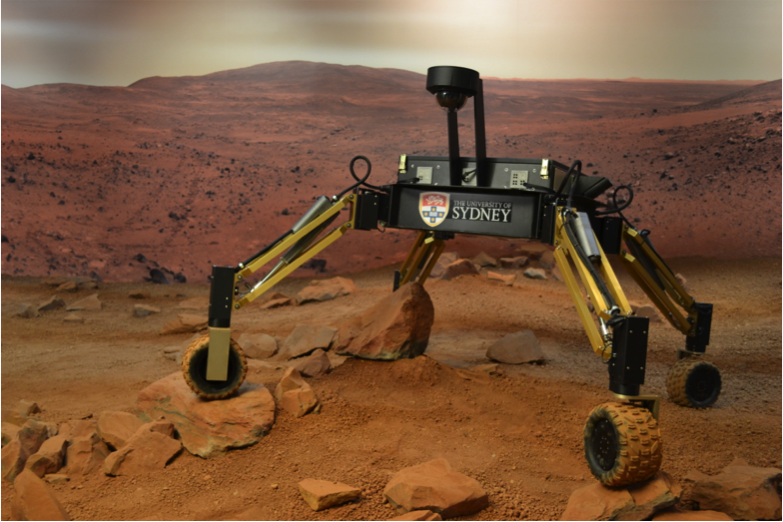
Join the Mars Lab team at the Powerhouse Museum and meet the Mars Lab’s robotic experimental Mars rovers. See these impressive robots in action on the Museum’s re-creation of the surface of Mars and find out why robots are used in space exploration.
Then, have your students try their hand at driving the Mars Lab’s robotic rovers remotely from your classroom over the internet!
This is a free video conference event
hosted by the Powerhouse Museum
In this exciting 2 PART virtual excursion workshop, your students get the unique opportunity to drive a robotic rover via a web browser from your classroom across the Mars Yard (a re-creation of the surface of Mars) located at the Powerhouse Museum in Sydney.
Led by the Mars Lab team via video conference, your students will explore the various landforms and features of the Martian surface to examine Mars’ history, geological evolution and potential evidence of past habitable environments. During the excursion your students will:
– work collaboratively to plan their mission using a mapping application
– practice driving the rover using a virtual simulation
– work collaboratively to drive the rover to sites of interest on the Mars Yard
– take photographs of sites of interest using the rover’s camera
The program focuses on collaboration, planning, observation and scientific investigation.
PROGRAM OUTLINE
Part 1| Introduction to Mars exploration and the Mars Lab (45 minutes) – Oct 8 at 9:30AM
Part 2| The mission (90 minutes) – TBD (Please book PART 2 by calling 02 9217 0349)
Part 1| Introduction to Mars exploration and the Mars Lab (45 minutes)
Via video conference, the Mars Lab team in Sydney will introduce your class to Mars exploration and the Mars Mission 5 activity. They will explain how the class will prepare for their Mars Mission.
Part 2| The mission (90 minutes)
The mission is the highlight of the session where mission teams get to drive the real robot rover and to play 5 different operational roles that will contribute to the class’ successful completion of the mission. Students will use the rover to capture images of features and landforms associated with their ‘clues’ for later analysis.
We are excited to offer these upcoming video conferences live from The Australian PlantBank – our award winning science and conservation facility at The Australian Botanic Garden Mount Annan. Our passionate educators are keen to share their broad knowledge of plants, sustainability, conservation and habitats with your students.
Seed Stories
Overview
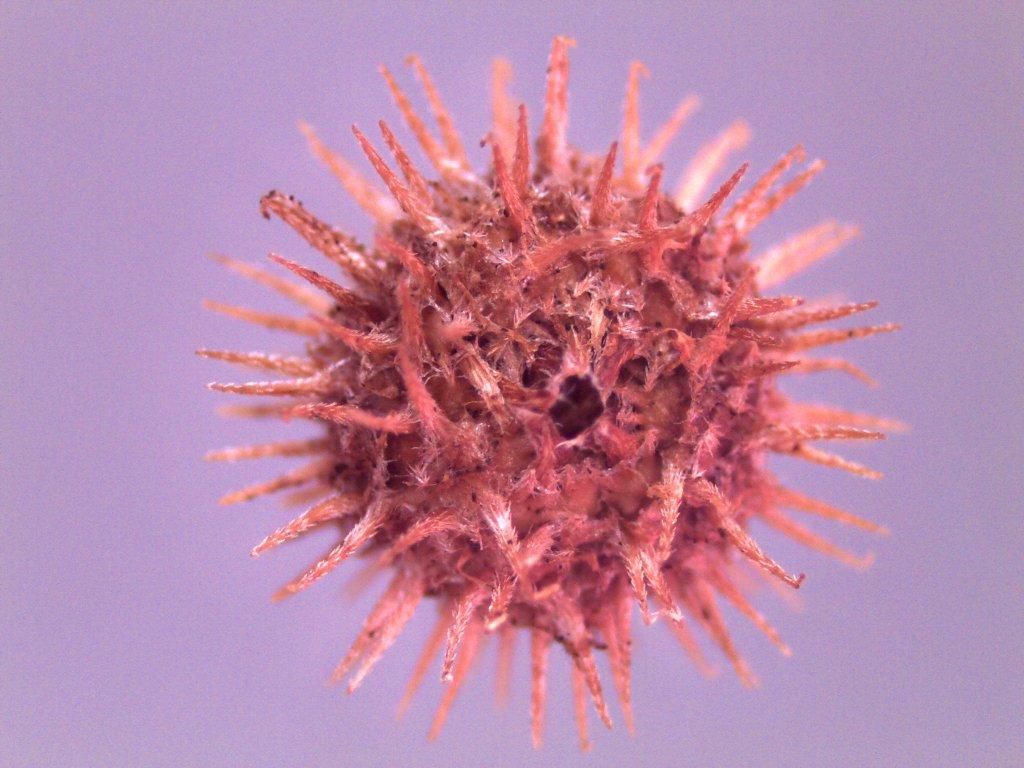
Discover more about seeds and their journeys through PlantBank – where they are researched or propagated or stored to protect and preserve them for the future.
Learn about plant life cycles and seed dispersal (helicopters, gliders, floaters and hitchhikers).
When: Friday 25 July 2014
Time: 11.30 am
Sustainable Gardens
Overview
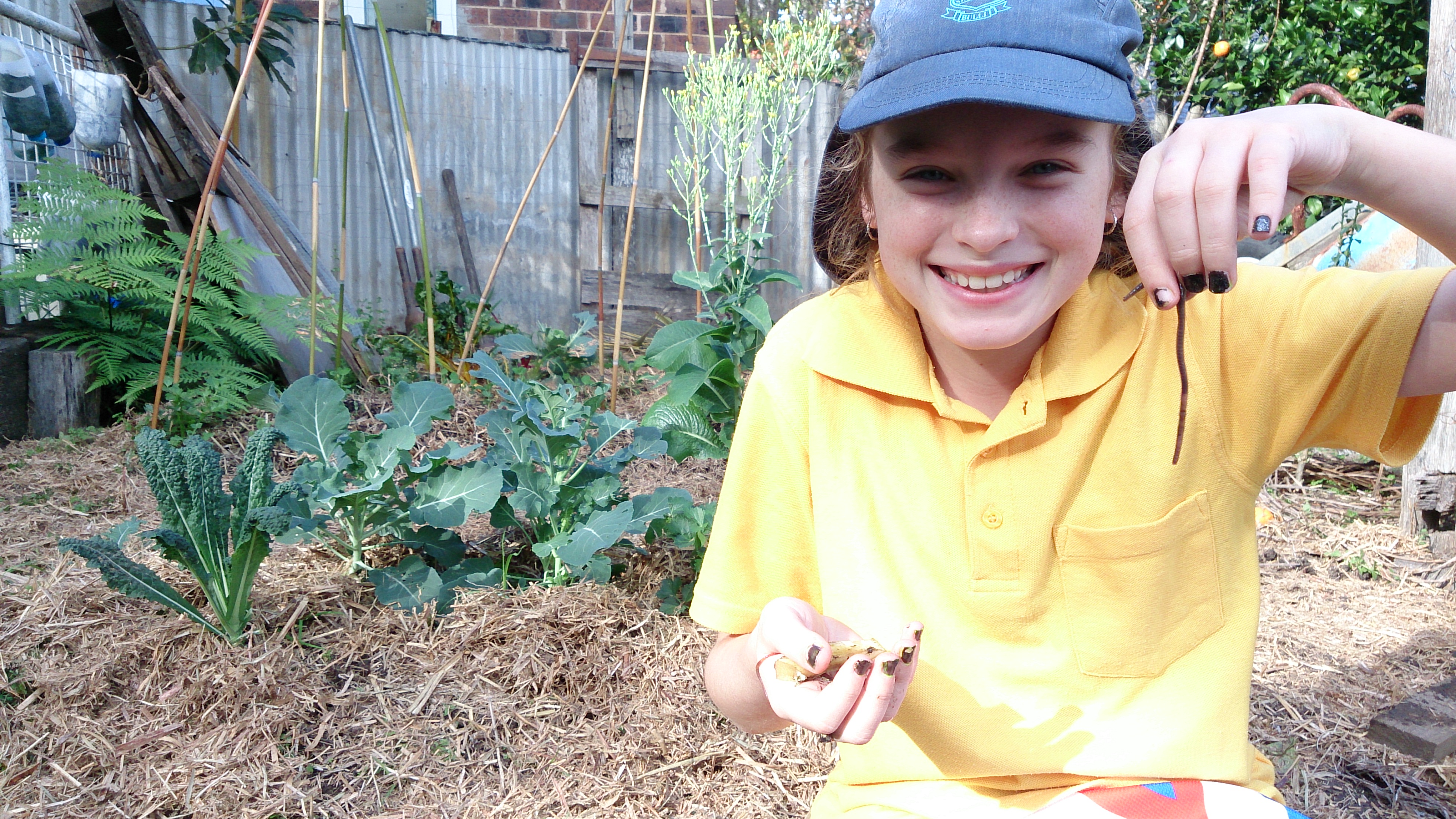
Find out more about sustainable gardening practices for your school garden, and explore the intriguing world of plants.
Our Botanic Garden educator will guide students through activities to encourage sustainable practices in the garden.
World Environment Day (WED) is the United Nations’ key event for encouraging worldwide awareness and action for the environment. Over the years World Environment Day has grown to be a broad, global platform for public outreach that is celebrated in over 100 countries.
The theme for 2014 is Raise your voice not the Sea Level.
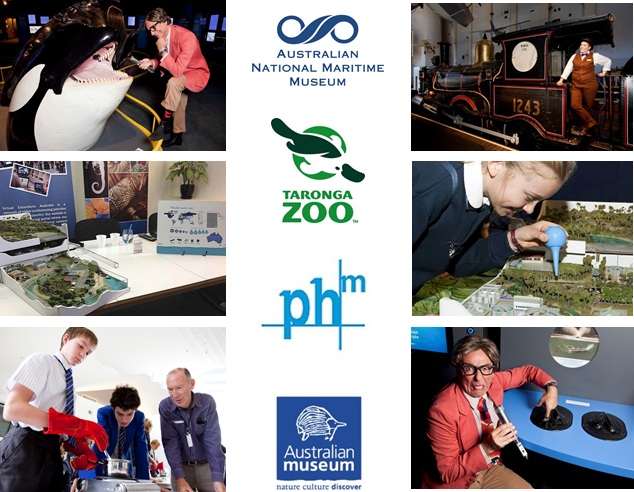
World Environment Day is an opportunity for everyone to realize not only the responsibility to care for the Earth and to become agents of change. Join the Australian Museum, National Maritime Museum, Taronga Zoo and the Powerhouse Museum in a 3 day festival recognising World Environment Day.
Overview:Join our intrepid groovy animal expert and media celebrity David Rabbitburrow to discover just how amazing these fascinating creatures are! Also investigate some of the threats to their future and what we can do to help.
Overview:Join our intrepid groovy animal expert and media celebrity David Rabbitburrow to discover just how amazing these fascinating creatures are! Also investigate some of the threats to their future and what we can do to help.
Overview:To celebrate World Environment Day the Australian Museum is participating in the World Environment Day video conference festival.The Catchment Health video conference explores some of the impacts facing our terrestrial and marine environments. This session looks at the importance of catchments and how everything we do on land has impacts in our marine environments.
Overview:Celebrate World Environment Day and adventure over to Taronga Zoo to learn more about the remarkable animals we share environments with around the World. This inspirational video conference will explore the plight of animals such as the Sumatran Tiger, Western Lowland Gorilla, Australian Sea Lion and our very own Corroborree Frog. All animals classed as endangered and in need of very specific actions from people to help their recovery.
Overview:Have you ever wondered what types of transport zoomed around our streets, railways and skies before motor cars, electric trains and planes? Come find out with Finn, our 20th Century transport enthusiast, as he transports you back in time to Sydney in the early 1900s.
Overview:To celebrate World Environment Day the Australian Museum is participating in the World Environment Day video conference festival. Bugwise explores the exciting and diverse world of invertebrates. Students will learn how to identify common groups of invertebrates and why they are important.
Overview:Put on your eco-designer thinking caps and take part in this hands-on workshop! Learn about ecological footprints and what it means to be sustainable. Meet Mr Airhead and teach him how to think sustainably using the 6 Rs: Reduce, Reuse, Recycle, Repair, Refuse and Rethink. Utilising ‘Rethink’ students complete a Lifecycle Analysis of a common product and come up with ways to reduce the product’s ecological footprint.
Overview:To celebrate World Environment Day the Australian Museum is participating in the World Environment Day video conference festival. Bugwise explores the exciting and diverse world of invertebrates. Students will learn how to identify common groups of invertebrates and why they are important.
Overview:Celebrate World Environment Day and adventure over to Taronga Zoo to learn more about the remarkable animals we share environments with around the World. This inspirational video conference will explore the plight of animals such as the Sumatran Tiger, Western Lowland Gorilla, Australian Sea Lion and our very own Corroborree Frog. All animals classed as endangered and in need of very specific actions from people to help their recovery.
Overview:To celebrate World Environment Day the Australian Museum is participating in the World Environment Day video conference festival.The Catchment Health video conference explores some of the impacts facing our terrestrial and marine environments. This session looks at the importance of catchments and how everything we do on land has impacts in our marine environments.
Overview:Join our intrepid groovy animal expert and media celebrity David Rabbitburrow to discover just how amazing these fascinating creatures are! Also investigate some of the threats to their future and what we can do to help.
Overview:Plastics are everywhere. It’s hard to imagine a life without using plastics. But the downside is that a lot of plastic enters the environment, where it will linger for hundreds of years. In the ocean, plastic moves into the so-called Great Garbage Patches. But why do these patches form? And whose garbage is where? What effect does the plastic have on marine life?
Virtual Excursions Australia is proud to support this event.
On the morning of Thursday 27 February, the Powerhouse Museum’s Mars Lab team linked up with eight Australian high schools and NASA’s Jet Propulsion Laboratory in California to speak with Vandi Tompkins, driver of the Mars rover Curiosity.
There was quite a bit of excitement around this event. The Minister assisting the Premier on Western Sydney, Executive Director Public Schools for the Department of Education and Communities and the Powerhouse Museum’s director, Rose Hiscock, all gathered at Casula High School (one of the schools joining in the video conference) to watch the event unfold.
From here at the Powerhouse in the Mars Lab studio, the Mars Lab team chatted with Vandi and invited young people at the participating schools to ask her some questions. Vandi told us about the latest news on Curiosity, having recently crossed Dingo Gap, a region on Mars named after a place in Western Australia, and heading over to a steep rocky region called Kimberley (also named after an Australian region!).
Vandi spoke about her dreams as a young girl in India to one day work in a space related job, to studying robotics and finally ending up working for NASA. She shared some of the maps and planning tools they use to prepare for each drive, showed us images of Curiosity and told us about what she does in her free time – drive motorcycles and rock climb (you know, the usual!)
One of the most memorable questions came from a year ten student: “What if I want to pursue a career in science and am not smart enough”. It made us realise what an important role we play at the Powerhouse Museum in building confidence and career paths for young people, and of course anyone smart enough to want a career in science has taken the first step!
Vandi then connected to our Museum’s Mars Lab rover, Mawson, via the internet and drove Mawson around the Mars Yard. She performed a few manoeuvres as she giggled excitedly saying how much fun it was to drive a rover in Australia through a web browser. She made a few comparisons between Mawson and Curiosity, saying that many of the functionalities were very similar.
The experience was a truly inspiring and memorable one, not only for the lucky young people who participated in the video conference link up, but also for everyone all over the world who watched the event live online as well.
Pi Day is celebrated on March 14th (3/14) around the world. Pi (Greek letter “π”) is the symbol used in mathematics to represent a constant — the ratio of the circumference of a circle to its diameter — which is approximately 3.14159.
Pi has been calculated to over one trillion digits beyond its decimal point. As an irrational and transcendental number, it will continue infinitely without repetition or pattern. While only a handful of digits are needed for typical calculations, Pi’s infinite nature makes it a fun challenge to memorize, and to computationally calculate more and more digits.
The Powerhouse Museum, The Australian Mathematics Trust and the Australian Museum are pleased to offer a series of session celebrating Pi Day. Join us on the 14 March 2014 to learn more about this amazing constant.
Overview: To celebrate what has become known as International Pi Day, the Australian Mathematics Trust is presenting a special video conference event for school children hosted at the Australian Museum
Overview: What do ‘Peter Piper’ and ‘Jack and Jill’ nursery rhymes have to do with maths and measurement? What are gills, bushels, pecks and the smoot? Find out in this special hands-on maths video
Overview: What do ‘Peter Piper’ and ‘Jack and Jill’ nursery rhymes have to do with maths and measurement? What are gills, bushels, pecks and the smoot? Find out in this special hands-on maths video co…
Overview: To celebrate what has become known as International Pi Day, the Australian Mathematics Trust is presenting a special video conference event for school children hosted at the Australian Museum
Overview: Celebrate International Pi Day with an exciting session on the inventor of the computer, Charles Babbage! Powerhouse Museum’s Principal Curator, Matthew Connell, introduces students to one o…
See the Pi Day website for other ways your students can celebrate Pi Day
Sea Week is the Marine Education Society of Australasia’s (MESA) annual education campaign to increase understanding and appreciation of the ocean and its living organisms.
The theme for 2014 is Sustainable Seas! Are there really plenty more fish in the Sea?
Human activities are putting pressure of the ocean and marine environments in many ways. Direct impacts like overfishing, chemical pollution and litter lower water quality and threaten wildlife. Less direct activities such as carbon pollution leads to climate change and ocean acidification. It is important to recognise that people have the power to make positive impacts on the ocean in their everyday decisions.
Join the Australian Museum, Manly Environment Centre and the National Maritime Museum in a week long festival highlighting our marine environments
There are a variety of sessions on offer with topics to suit every school.
The Australian Museum is bringing our scientists to you! This is your chance to come face to face with an Australian Museum scientist and ask your questions. Meet Mark McGrouther Collection Manager; Ichthyology (Fish) to talk about the collection and some of the exciting field trips he’s been on.
The Catchment Health video conference explores some of the impacts facing our marine environments. This session looks at the importance of catchments and how everything we do on land has impacts in our marine environments.
The Claws, Tentacles and Spines session explores the fascinating diversity of marine invertebrates. Join the Australian Museum to discover some of the amazing adaptations of these spineless wonders.
Australian Museum is bringing our scientists to you! This is your chance to come face to face with an Australian Museum scientist and ask your questions. Amanda Hay will talk about her research into the ecology of larval fishes.
To recognise Ocean Care Day on Sunday 1 December Virtual Excursions Australia is presenting Marine Day on Friday 6 December. Join us for a range of video conferences promoting healthy waterways and marine environments.
Participate in sessions from OceanWatch, Taronga Zoo and the Marine Stewardship Council and the Australian Museum. There are a range of topics to suit every school.
To recognise Ocean Care Day on Sunday 1 December the Australian Museum is participating in the Marine Day video conferences. The Catchment Health video conference explores some of the impacts facing our marine environments. This session looks at the importance of catchments and how everything we do on land has impacts in our marine environments.
Learn all about commercial fishing and the NSW seafood industry from those who know it best. Join Sydney fisherman Paul Bagnato and OceanWatch’s Brad Warren to get an up-close and personal view of an important local industry that puts food on our plates and export dollars in the bank. Paul and Brad will also discuss the marine environment, sustainability and how fishing is managed.
Meet the Experts brings Australian Museum scientists to you! This is your chance to come face to face with an Australian Museum scientist and ask your questions. Mark McGrouther the Collection Manager; Ichthyology (Fish) will talk about the collection and some of the exciting field trips he’s been on.
The Claws, Tentacles and Spines session explores the fascinating diversity of marine invertebrates. Join the Australian Museum to discover some of the amazing adaptations of these spineless wonders.
Taronga Zoo and the Marine Stewardship Council (MSC) have teamed up to educate students about healthy marine life, sustainable seafood and how their choices matter. We are holding FREE teacher video conferences to informally introduce the 2014 student based project.
ClickFest is an annual video conferencing festival run in November each year. Clickfest highlights the diversity and scope of video conferences available to schools across Australia.
The Australian Museum has been involved in ClickFest since it started in 2011 and is proud to be part of this exciting event. In 2013 ClickFest will be launched with Dinosaur day on 4 November 2013.
Join Winny the Australian Museum’s Muttaburrasaurs as she opens ClickFest and Dinosaur day.
Dinosaur Day
Meet Winny
The Australian Museum launches the 2013 Dinosaur Day with Winny our Muttaburrasaurs. Come along to meet Winny to learn more about Australian Dinosaurs 10am Monday 4 November
Australian Giants
Giant animals from dinosaurs to megafauna have roamed the Australian continent at different times. Find out about some of these Australian giants. Look at fossils and learn what they tell us about these extraordinary animals. 11am & 1pm Monday 4 November
Dynamic Earth
The Video conference will look at the dynamic earth forming processes. There will be experiments highlighting different earth processes. You will also see Australian Museum specimens and there will be opportunities to ask questions, so have some ready. 2pm Monday 4 November
ClickFest
Geology Rocks
The Video conference will look at the dynamic earth forming processes. There will be experiments highlighting different earth processes. You will also see Australian Museum specimens and there will be opportunities to ask questions, so have some ready. 11am 5 & 19 November
Minibeast Magnified
Minibeasts Magnified explores the exciting and diverse world of invertebrates. Students will learn how to identify common groups of invertebrates and why they are important. 10am 5 & 19 November
ClickFest – Life in Freshwater
This event provides a glimpse into life in freshwater. You will find out how to use water quality collecting and testing equipment and we will look how we impact our water ways and what we can do take to improve our catchments.
10am 6 & 14 November
Meet the Experts – FREE
The Australian Museum is bringing our scientists to you! Meet the Experts aims to provide quality science education and research resources. This is your chance to come face to face with an Australian Museum scientist and ask your questions. 10am 15 November
ClickFest – Museum Secrets Revealed
Become a detective and discover how scientists collect, preserve and display the many extraordinary specimens in their collection. Explore the Australian Museum specimens to investigate how they were discovered and why they are important.
The Australian Museum has been involved in ClickFest since it started in 2011 and is proud to be part of this exciting event.
ClickFest will be launched with Dinosaur day on 4 November 2013.
Join Winny the Australian Museum’s Muttaburrasaurs as she opens ClickFest and Dinosaur day.
See below for Australian Museum session throughout ClickFest
Dinosaur Day
Meet Winny
The Australian Museum launches the 2013 Dinosaur Day with Winny our Muttaburrasaurs. Come along to meet Winny to learn more about Australian Dinosaurs 10am Monday 4 November
Australian Giants
Giant animals from dinosaurs to megafauna have roamed the Australian continent at different times. Find out about some of these Australian giants. Look at fossils and learn what they tell us about these extraordinary animals. 11am & 1pm Monday 4 November
Dynamic Earth
The Video conference will look at the dynamic earth forming processes. There will be experiments highlighting different earth processes. You will also see Australian Museum specimens and there will be opportunities to ask questions, so have some ready. 2pm Monday 4 November
ClickFest
Geology Rocks
The Video conference will look at the dynamic earth forming processes. There will be experiments highlighting different earth processes. You will also see Australian Museum specimens and there will be opportunities to ask questions, so have some ready. 11am 5 & 19 November
Minibeast Magnified
Minibeasts Magnified explores the exciting and diverse world of invertebrates. Students will learn how to identify common groups of invertebrates and why they are important. 10am 5 & 19 November
Meet the Experts – FREE
The Australian Museum is bringing our scientists to you! Meet the Experts aims to provide quality science education and research resources. This is your chance to come face to face with an Australian Museum scientist and ask your questions. 10am 15 November
All booking can be made through the Dart Connections website dartconnections.org.au/home
– See more at: http://australianmuseum.net.au/blogpost/Lifelong-Learning/ClickFest-2013#sthash.KMCQwsdr.dpuf