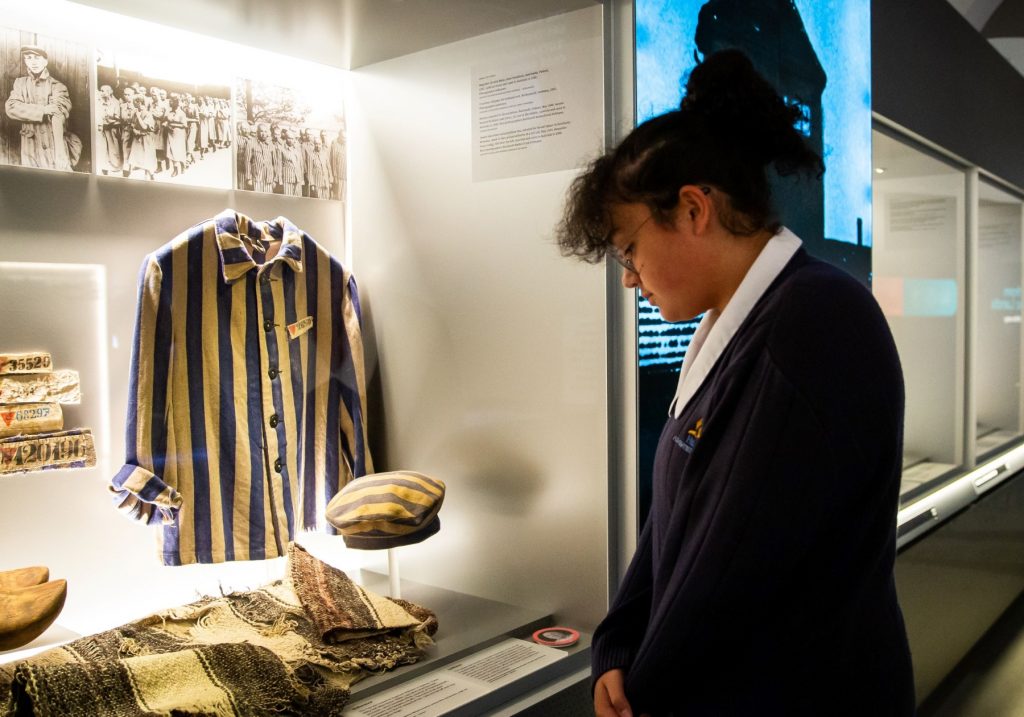
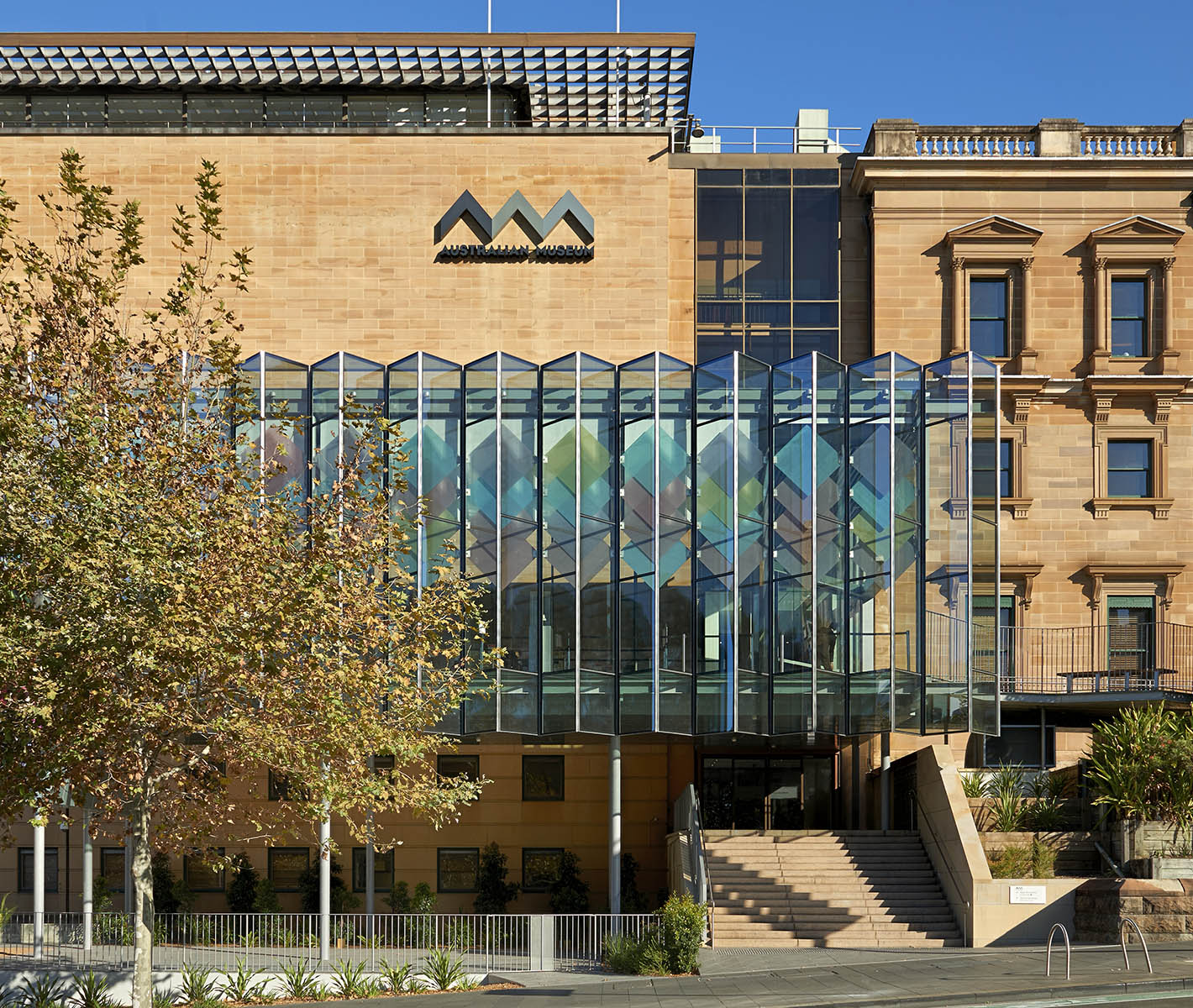
The Sydney Jewish Museum is Virtual Excursions Australia’s newest content provider. The Sydney Jewish Museum is an institution that gives history a voice through collecting and preserving historic objects, commemorating and educating, with a mission to challenge visitors’ perceptions of morality, social justice, democracy and human rights.
History LIVE: Behind the scenes with a curator
Have you ever wondered about all the different artefacts in a museum? Did you know that not all of them are on display at the same time? Behind the scenes, many more artefacts are waiting to tell their stories.
Ever wondered about the Jewish festival of Chanukah? What do the candles represent and what is a dreidel? Candles, dreidels and even fried foods are all important parts of the Jewish festival of lights, Chanukah! This year Chanukah, which is celebrated over 8 nights, will begin in late November.
Sydney Jewish Museum has a range of program to engage your students virtually in an interactive workshop. Benefit from the expertise and experience of our team of educators to create an engaging, thought-provoking experience for your students.
The Sydney Jewish Museum offers free curriculum-linked teaching resources underpinned by rigorous research and expert subject knowledge. Discover a range of lesson plans, videos, worksheets and activities available for you to download and incorporate into your classroom.
Many of our resources offer a sneak peak behind the scenes of the Museum to discover a range of case studies, videos, objects and images that will help you bring history to life for your students.
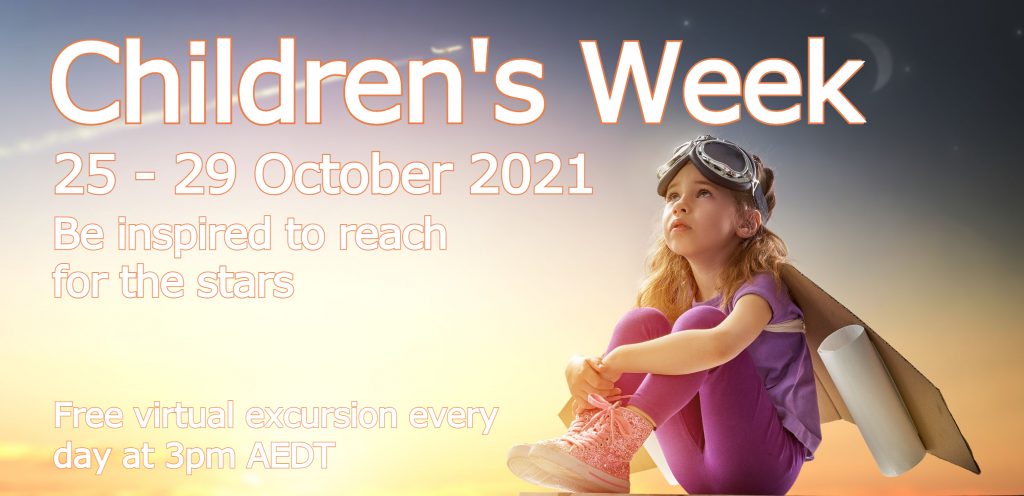
Virtual Excursions Australia has a range of FREE programs for Children’s Week 2021. Children’s Week celebrates the right of children to enjoy childhood.
Natural Disasters
A hands-on science workshop where we investigate all manner of natural disasters and the science behind them.
Under the Sea
Take a journey beneath the waves to explore Australia’s amazing marine life. Discover different marine habitats and the animals that live there.
Liquid Nitrogen Show
A “super cool” science show where we freeze things, explode things and explore just what happens when objects are rapidly cooled or heated.
Fascinating Frogs
Did you know that there are 240 species of frogs found across Australia? Find out how you can identify the frogs in your local area.
We have created a list of Australian education providers and websites that have great online learning resources. There are some great options to help your students and kids in class or at home.
ABC Education
ABC Education brings you thousands of free, curriculum-linked resources for Primary and Secondary students and teachers.
ABC TV Education broadcasts two hours of dedicated education programming for school aged viewers nationwide each weekday from 10am – 3pm on ABC ME.
Live Streams
Sea EagleCAM is a live remote feed operating out of the BirdLife Discovery Centre in the Armory at Sydney Olympic Park close to the Parramatta River.
Taronga Zoo Sydney has set up 24/7 live-streaming cameras at so you can enjoy your favourite animals at any time of day.
Get up close with our animals from the comfort of your own home and discover more about WILD LIFE Sydney Zoo by watching our live streams below.
Fizzic Education has 150 Science Experiments online for FREE. Science experiments and project ideas using simple, low cost materials that teach science easily.
Design a product or a process, using algae, that makes an existing product or process more sustainable. Get your students involved in the Algae Innovation Challenge. The Challenge is open to Stage 4 & 5 students across Australia.
Join us for the information session: 21 June at 3.30pm
This event is proudly brought to you by the UTS Deep Green Biotech Hub. Students will learn about the emerging, cutting-edge field of biotechnology as well as aspects of algae biology and design-thinking.
The Algae Innovation Challenge will develop students’ team-work, creative and scientific thinking, presenting and entrepreneurial skills vital for equipping the next generation of changemakers to reimagine ‘business as usual’ and build tomorrow’s green solutions, today.
The New South Wales Deep Green Biotech Hub (DGBH), located at the University of Technology Sydney, is supported by the NSW Government through the Boosting Business Innovation Program (BBIP). DGBH brings together researchers, SMEs, industry, start-ups, students and other stakeholders to propel NSW to the forefront of algae-based biotechnology innovation in Australia.
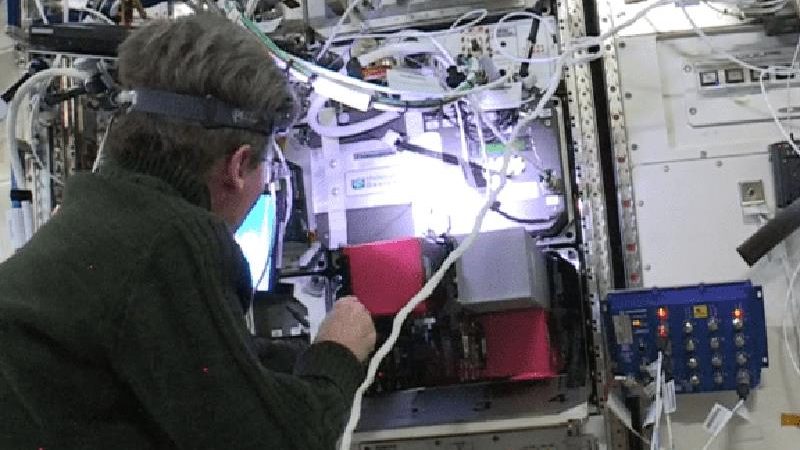
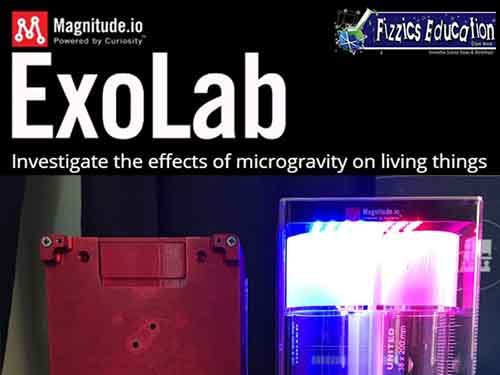
ExoLab-9 is a unique exobiology classroom experience. Your student can be involved in a science experiment where students from across the world compare their results with an identical growth chamber on the International Space Station (ISS).
Fizzics Education are the lead for the Australian component of this global education opportunity.
Join an international school community to share results & ideas along with the U.S. National Laboratory.
Collect and analyze data to identify the optimal combination of legume, bacteria, and soil to produce nodulation in the harsh environment of the space.
Engage in experimental design, data collection and analysis, writing and revising hypotheses, and communicating about what they’ve learned using evidence from their experiments.
Direct curriculum outcomes for high school and primary year groups.
Guided by experienced educators from Fizzics Education & Magnitude.
Find out about the equipment needed to be involved and the different ways that you can access this.
Find out how your school can be involved
Run an identical experiment in parallel with the International Space Station, in collaboration with Magnitude.io & Fizzics Education in your school. Join an international school community to share results & ideas along with the U.S. National Laboratory.
Register on the links below for your preferred Teacher Information sessions in June and July.
The Youth Eco Summit is going digital in 2020. Register now for the free YES Live shows for your students on Wednesday 18 November. Australian Wildlife Displays: Marsupials and More at 1.15pm and the Fizzics Education: Liquid Nitrogen Show at 2.15pm.
Australian Wildlife Displays: Marsupials and More
Meet Dozer the wombat and many more furry Australian animals! See Dozer’s furry face and bony bottom up close! Gum-nuts the ringtail possum, Barney the brush-tailed bettong and Alfie the sugar glider. Let’s learn about these Aussie animals, the adaptations that make them special, their life and their plight in Australia.
Fancy a “Face to face” with the icons of Australian mammals? Join Australian Wildlife Displays at 1.15 – 2 pm on Wednesday 18 November.
Find out how solids, liquids, and gases change when rapidly heated and cooled. Smash a tennis ball! Shrink a balloon instantly! What happens to living things if they are frozen? How does a liquid nitrogen sprinkler work? Watch exploding balloons and more in this super ‘cool’ science show!
Join Fizzics Education at 2.15 – 3pm on Wednesday 18 November.
Whilst understanding how to use a camera and microphone during a live online program is essential, choosing additional content to interact with can make all the difference to the engagement of your audience. Thankfully many of the web conferencing tools have screen sharing capability, which means that you can share extra content that both help support your lesson and breaks up the monotony of a constant video of you as a ‘talking head’!
The following only briefly touches on the huge variety of options to things to share on-screen, as in reality what you can share is only limited by your creativity. What’s more, as long as you control the child safety aspects of your meeting, you can also have your attendees share their screen too which means the interactivity increases even further.
Whiteboard sharing for the win
A screen capture from full desktop sharing of Adobe Photoshop – Fizzics Education
Many of the web conferencing software have a whiteboard function. This means you can quickly draw on diagrams on the fly as you speak to them. There is even the option in some cases for multiple people to be able to draw onto the whiteboard at the same time. If your conferencing software doesn’t have a whiteboard function, you can screen share Microsoft Paint, Adobe Photoshop and other applications which will produce the same effect. You can also save the images and share them afterwards too!
Connect peripheral devices to share
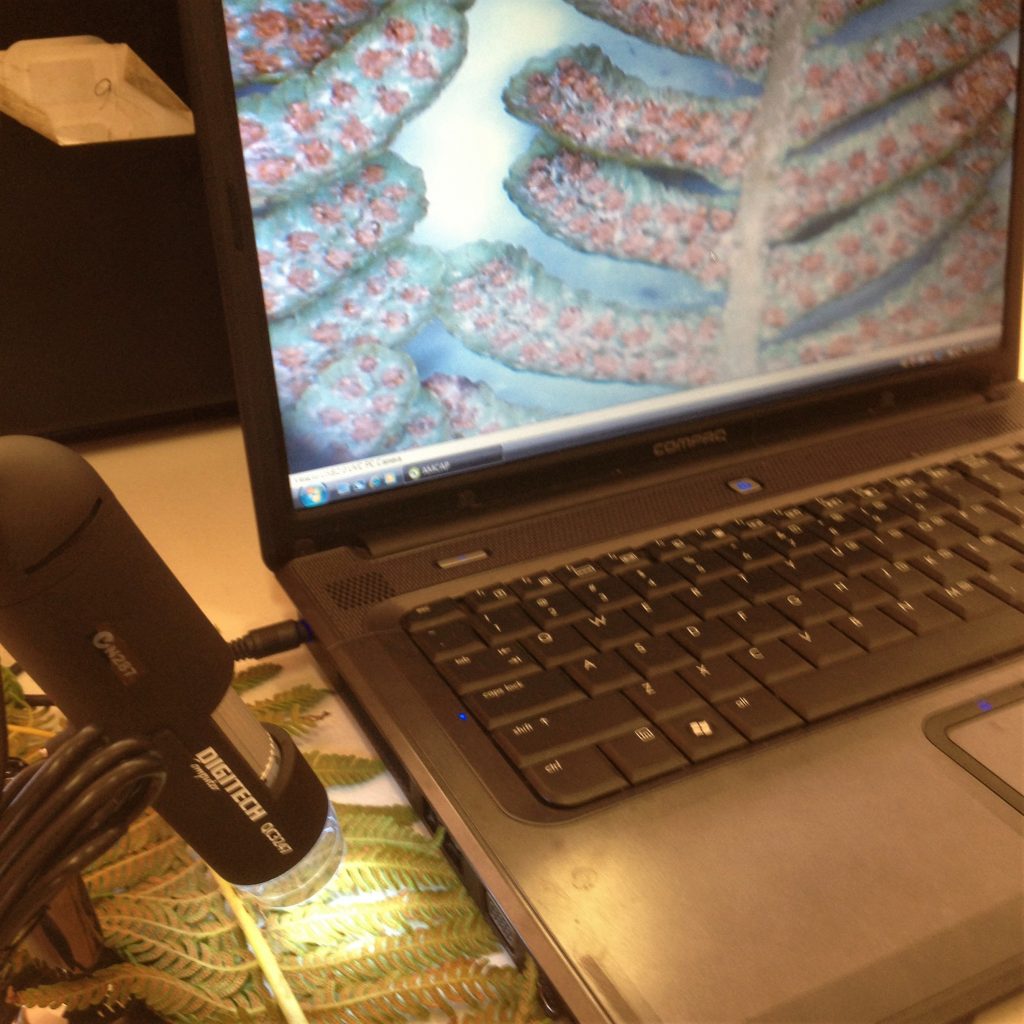
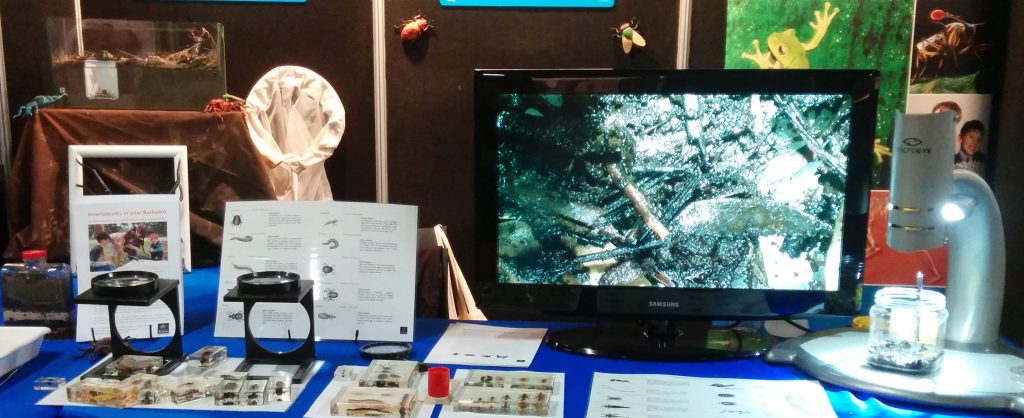
Using a USB Digital Microscope to look underneath a fern – Fizzics Education
Your peripheral devices that you routinely use might well be fascinating to your remote audience! For example, not everyone can get USB powered digital microscopes easily. Why not share their images live? Simply power-up your digital microscope and then screen share the results! If you do some testing, sometimes you can find that the digital microscope camera is recognised by the web conferencing app itself, which means you can simply toggle between your camera and the microscope. There are also converters which allow your analogue microscope to share the images digitally too, a great way to microscopic organisms in more detail. Think about what device you have at your site that could be shared during your conference.
Use data logging live in your conference
Wouldn’t it be great to share live experiment results? Well, with screen sharing you can! There are plenty of data logging apps out there that you can be shared over a remote connection. One of the ones that Fizzics Education uses is Science Journal. It’s a data logging app by Google that uses the sensors in your smartphone or tablet to perform experiments! Record sound levels, magnetism, light levels, acceleration and much more. Very handy for your remote audience to see measurements in real-time of your experiment, plus you can pull the data file and share it to your audience either during the conference or afterwards as well.
Connect people together by sharing
Remote connections can often feel like a barrier for sharing experiences. Why not consider having your audience share what they are experiencing from their location? In early April 2020, Fizzics Education organised a Supermoon party, where people from Japan, the Philippines and Australia all were involved in sharing what they were seeing live during the event. Because of timezone differences, people were able to see that not all of us were able to experience the Supermoon rise at the same time, plus it opened up a chance to discuss about different cultures & locations as well.
Use visual apps that enrich your live content There are so many science apps available these days! If you connect your device to your web conference, there is no reason why you can’t share some of this content if it is already available for free. You can share virtual skies, explore the human body, play science games and more! As long as your app fits well within your conference, we say go for it!
These were just some brief ways that you can use screen sharing to enhance remote learning. Some extra tips to consider.
Only have the tabs open on your browser that you are happy to share! You may not wan to share everything that is on your desktop
To control what you share even further, only choose the application that you want to share instead of the whole screen.
Turn off desktop notifications & reminders that you might normally receive during the day
Be aware of internet bandwidth. If you are sharing a rich HD moving image, this may not show up as well for your remote audience if their internet is not high speed.
If you are sharing apps, have them preloaded and ready to go on the screen that you need.
If you use screen mirroring to your device, there is a lag in connecting to the conference that you will need to adjust for.
Practice and test! Make sure you know how connect to your extra content easily.
So, are you ready to give it a go? When it s comes down to it, it just a matter of thinking carefully about how the extra content impacts upon your overall presentation.With these tips and mind and little creativity, your remote audiences will love your line online programs!
There have been some great collections of digital programs being complied from around the world. I wanted to create a list of Australian education providers and websites that have great resources. There are some great options to help your students and kids in class or at home.
ABC Education
ABC Education brings you thousands of free, curriculum-linked resources for Primary and Secondary students and teachers.
ABC TV Education broadcasts two hours of dedicated education programming for school aged viewers nationwide each weekday from 10am – 3pm on ABC ME.
Live Streams
Sea EagleCAM is a live remote feed operating out of the BirdLife Discovery Centre in the Armory at Sydney Olympic Park close to the Parramatta River.
Zoos Victoria is bringing the zoo to you with learning activities, resources, webinars and live stream animals to help with real-world learning, by distance. Check out the Zoo Education Online resources. Melbourne Zoo and Werribee Open Range Zoo have set up a live streams of enclosures online.
Taronga Zoo Sydney has set up 24/7 live-streaming cameras at so you can enjoy your favourite animals at any time of day.
Get up close with our animals from the comfort of your own home and discover more about WILD LIFE Sydney Zoo by watching our live streams below.
ReefCam is Australia’s first ever rocky-reef, live-feed, combined under and above water webcams. Discover species found in Port Phillip Bay including the underwater flora and fauna.
Fizzic Education has 150 Science Experiments online for FREE. Science experiments and project ideas using simple, low cost materials that teach science easily.
Cool Australia has FREE activities and resources that make teaching and understanding real world scenarios as easy as possible.
Australian Music Examinations Board Theory of Music online courses now FREE
TedED is producing high-quality, interactive, video-based lessons to help teaching and learning from home.
Virtual Field Trips
Here are 30+ great Virtual Field Trips for early learners to explore from your home on your couch. From zoos and landmarks to famous museums, you can explore the world with your child with over a month of virtual field trips
Interactive online programs
Interactive activities direct to your home through as Virtual Excursion. Fizzics Education, Sydney Science Education, REDed Dance and Chess Mates are all offering online school holiday programs.
The Sydney Olympic Park Authority (SOPA) Education Unit delivers curriculum based school excursion programs and events to over 30,000 K-12 school students annually. These programs focus on Geography, Science, History and cross-curriculum priorities of Aboriginal and Torres Strait Islander History and Cultures and Sustainability.
Virtual Excursion at Sydney Olympic Parks. Exploring the Badu wetlands. Park Live will enable your students to join in fieldwork sessions.
Our suite of place-based school excursions are (usually!) experiential, immersive, hands-on learning opportunities that share our unique story of sustainable development, environmental conservation and heritage management across the Parklands, urban township and Heritage Precincts of Sydney Olympic Park. We also have annual marquee education events, the Primary and Secondary Youth Eco Summits (YES) which involve more than 40 partnering organisations.
As a response to the service delivery challenges we are facing with customers unable to attend school excursions, SOPA currently has live-streaming virtual excursions and customised resource packages for teachers in rapid development. From next week under the mantle of ‘Park Live’ these interactive programs will enable classes and/or individual students to connect directly to our educators in the wetlands using Zoom conferencing. Here is a glimpse of a what the students will be involved in during a live-streamed virtual excursion in their classrooms. They will be able to interact with the SOPA Educator and any other presenter partners that we have joining the virtual excursion. This video clip is starring one of our casual Educators Tom who also runs nature based public tours with his company “Hooked on Nature”.
Where possible we will engage other partners and industry experts to enhance each live-stream session. Our next steps will be to extend this approach to our heritage programs, technical tours, ArtExpress at the Armory and courses for Wetland professionals. We will then look at the potential for interactive live-stream models to deliver our YES events out to schools. We have immense pride in our place as a huge outdoor classroom and will continue to connect people safely to our programs and resources however we can. If you want to partner in this or simply talk through the technical aspects of the approach please contact mike.bartlett@sopa.nsw.gov.au or danielle.leggo@sopa.nsw.gov.au.
Video Conferencing can be used to create unique learning experiences for students of all ages. Sydney Science Education offers a range of video conferences called Science Made Easy. Specialising in Earth and Environmental Science, Science Made Easy are hands on, interactive workshops designed to inspire your students about the natural world.
Since 2001, I have designed and delivered innovative programs for schools across New South Wales and Australia. Over the last 20 years I have become a leading expert on using digital technologies especially video conferencing to deliver quality learning experiences in schools.
Through these programs your students will gain insight into the importance of science and help them discover more about the natural world. Workshops are designed to empower your students and provide them with the knowledge and skills to continue their learning. Content will help increase your students scientific literacy and critical thinking skills by participating in experiments, fieldwork and asking questions.
Due to the current health crisis Video Conferencing becomes more important as a way to deliver programs to students in the classroom and at home.
https://youtu.be/CiDtyDzekw0
Find out how you can participate in live, interactive video conference sessions. This enables your students to ask questions and really be involved in their online learning.
There are a range of packages available to suit your digital science education needs. Enquires and bookings